
From 14 to 16 November 2025, the World Conference on City Culture was successfully held in Shanghai. As one of the co-organizers, the Institute of Literature at SASS drew on its longstanding expertise in city culture and humanities research. Centered on the core theme “New Ecological Quality and Consumption Momentum of City Culture in the AI Era”, the conference brought together global perspectives, industry practices, and academic insights, positioning itself as both a source of ideas and a platform for practical engagement in city cultural development amid rapid technological transformation.
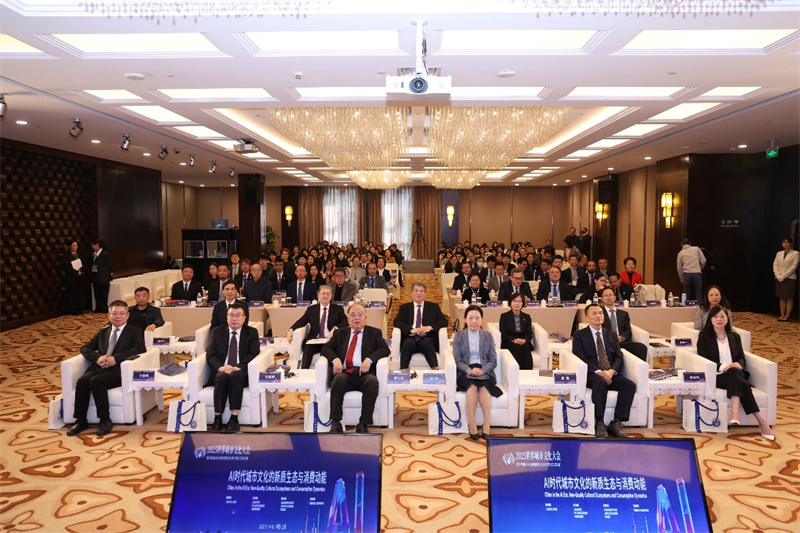
Held in a hybrid online-offline format, the conference gathered representatives from cities around the world, along with experts and professionals from the cultural industries. It showcased innovative achievements in city culture while probing the underlying logic of technology-humanity symbiosis, underscoring the value of academic research in advancing urban development.
At the closing session, Professor Yuan Xiaoyi, Director of the Institute of Literature at SASS, highlighted “the importance of interpersonal communication in the era of artificial intelligence”. Her remarks echoed the conference’s commitment to humanistic values and charted a clear course for future research on AI-humanistic symbiosis, bringing the interdisciplinary discussions to a meaningful convergence between academic inquiry and practical application.
This conference marked a significant step toward deeper integration between academic research and urban practice. By offering forward-looking thematic frameworks and generating rich case studies through cross-disciplinary dialogue, it not only helped shape the direction of city cultural development but also laid a solid foundation for future research. Looking ahead, the Institute of Literature will continue to focus on the theme of “City Culture in the AI Era”, deepening interdisciplinary research and international exchange, and translate the conference outcomes into think-tank insights serving the cultural development of Shanghai and cities worldwide. In doing so, it aims to contribute Chinese academic perspectives and practical solutions to the building of a community with a shared future for mankind.

